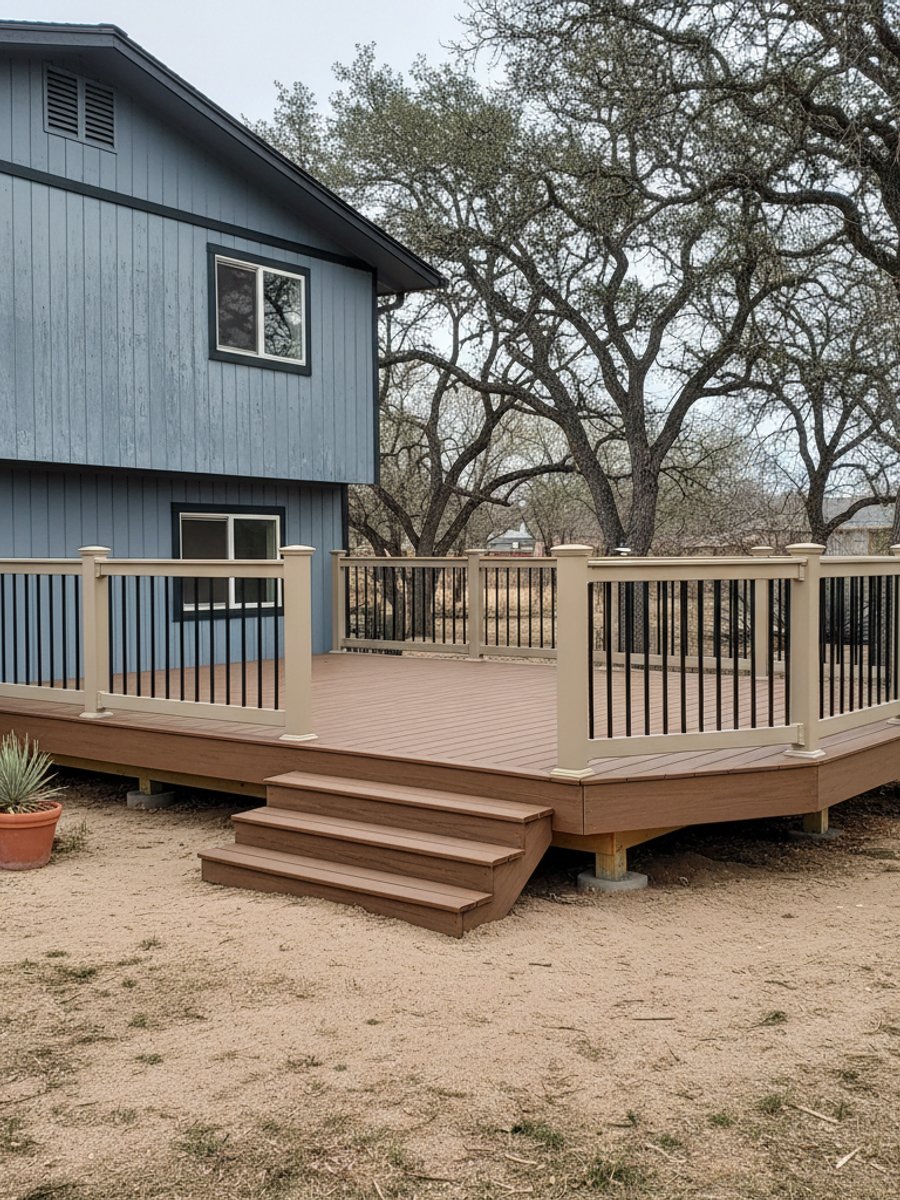
Henderson has more decks going up right now than it did ten years ago, and more decks quietly failing than most homeowners realize until they're standing on one that flexes. Picking the right builder matters more here than it would somewhere with simpler ground and simpler weather. This isn't a straightforward build-anywhere climate. It's caliche under the topsoil, summer heat that hits 110°F for weeks at a stretch, and an HOA on nearly every street asking to see your plans before you dig.
Ask about the caliche before you ask about the wood
Most lots in the Las Vegas valley, Henderson included, sit on a hardpan layer of caliche, a cemented calcium carbonate crust that can start anywhere from a foot down to several feet. A post hole digger won't touch it. Digging footings through caliche usually means a gas auger or a jackhammer bit, and it takes longer than digging the same hole in ordinary soil. If a builder quotes your footings without ever mentioning caliche, either they haven't dug in this valley much, or they're planning to under-bid the excavation and eat the surprise later, which usually means they eat it by cutting corners somewhere else.
Footing depth here still has to clear the frost line the county requires, which locally runs in the 12 to 18 inch range depending on the structure, even though we don't get the deep freezes colder states deal with. A few nights a year do drop below freezing in December and January, and shallow footings poured in soft fill can still heave slightly over time. Ask what depth they're planning and what they hit going down. A builder who's worked here before will already know before your shovel ever touches ground.
Permits and HOA approval aren't optional paperwork
The City of Henderson requires a permit for most attached decks, and for a lot of freestanding ones too depending on height and size. That means a footing inspection before concrete goes in, and a framing inspection before the decking boards go down, sometimes an electrical inspection if you're adding lighting or an outlet. A builder who tells you permits slow things down and offers to skip it is offering you a deck the city can make you tear out later, and one your homeowner's insurance may not cover if something goes wrong.
On top of the city, Henderson is thick with HOAs, Green Valley, Anthem, Inspirada, MacDonald Highlands, Seven Hills, and most of them run their own architectural review before the city permit even matters. Some want your fence line and deck height submitted for approval, some care about railing style and stain color matching the house. A builder who's done work in your specific neighborhood before will know what that HOA's committee usually asks for, which saves you a resubmission and a few weeks of waiting.
Older streets and newer subdivisions need different things
A lot of Green Valley and Green Valley Ranch was built through the 1980s and 90s, and decks going up there now are often a repair or a full replacement of something that's already 20 to 30 years old, with ledger boards bolted to framing that may have shifted, and old fasteners that have corroded in the heat. A builder working on one of these needs to actually pull the old ledger and check what's behind it before bolting anything new to it.
Newer subdivisions like Inspirada or Cadence are mostly fresh builds on engineered fill, which behaves more predictably, but the CC&Rs tend to be stricter about what a deck is allowed to look like from the street. Different problems, different homework, and a builder who treats every lot the same way probably isn't paying close enough attention to yours.
What the desert does to the materials themselves
Wood decks here take a beating from UV, not just weather. Untreated or poorly sealed wood can check and split within a couple of summers under direct sun, and a deck facing south or west gets hit hardest. A builder who understands the local sun angle will talk to you about orientation, not just wood species. Composite handles UV better but gets genuinely hot to the touch in July, hot enough that some homeowners choose lighter colors specifically so bare feet can stand on it at 2pm. Ask what color options actually stay walkable in summer, because a dark brown composite deck at high noon in Henderson is not a place you want to sit down.
Then there's monsoon season, July through September, when a dry afternoon can turn into a downpour that dumps an inch of rain in twenty minutes. Flashing at the ledger board matters more than people think, because a poorly flashed ledger will let water track behind the siding during one of those storms and rot the rim joist from the inside where you can't see it. Ask how they flash the ledger connection. If the answer is vague, that's worth noticing.
Signs it's time to walk away
- They won't give you a license number, or the number doesn't check out with the Nevada State Contractors Board.
- They ask for full payment upfront before any material is on site.
- The quote has no line item for footings, framing lumber size, or fastener type, just a total number.
- They tell you permits aren't necessary for a deck this size, without checking with the city first.
- They can't tell you how deep they're planning to dig the footings, or seem surprised when you bring up caliche at all.
None of these alone means fire the guy on the spot, but two or three together is a pattern, and it's the kind of pattern that shows up again later as a deck that wobbles at the railing or a ledger that's pulling away from the house.
What a good conversation with a builder sounds like
A builder who's done this work in Henderson for a while will bring up the caliche before you do. They'll ask which way your deck faces before recommending a board color. They'll know whether your HOA wants a submission packet or just a photo. They'll talk about joist spacing and footing depth like it's normal conversation, because for them it is. That's the difference between someone quoting a job off a template and someone who's actually built decks on this ground, in this heat, through a couple of monsoon seasons.
If you're weighing a new deck, a repair, or a full tear-out and replacement, take a look at our deck builder work and ask us the same questions you'd ask anyone else. The right answers shouldn't be hard to get.